




 A classic struggle is reimagined in GODZILLA: KING OF THE MONSTERS. TM & © TOHO CO., LTD. © 2018 WARNER BROS. ENT. © LEGENDARY 2019
Author: Richard Pusateri Official Site: godzillamovie.com (US), godzilla-movie.jp (Japan) Official Twitter: #GodzillaMovie GODZILLA: KING OF THE MONSTERS, the third installment in the Legendary Pictures MonsterVerse series, has been able to connect fondness for the classic 1960s Godzilla movies with the form of modern blockbuster action movie extravaganzas. GKOTM remembers where it came from. This movie is not your father’s Godzilla but it remembers your grandfather’s Godzilla as it has many references, large and small, to the classic Japanese giant monster movies of the 1950s and ‘60s. GKOTM begins with an aural and visual tribute to Toho’s original 1954 monster movie and continues symbolic references to the atomic bombing of Hiroshima first seen in GODZILLA (2014).
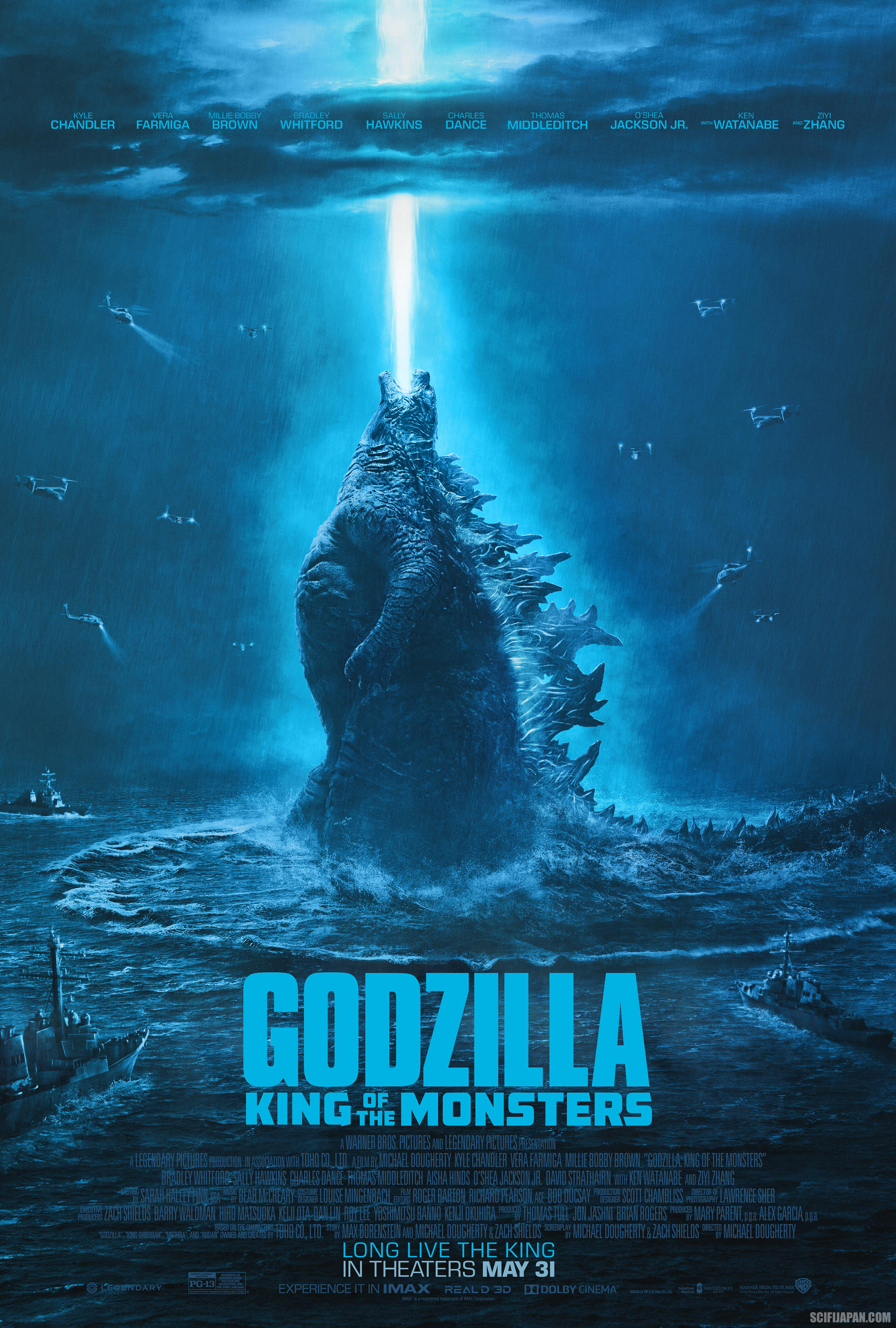 Photo courtesy of Warner Bros. Pictures. TM & ©TOHO CO., LTD. © 2018 WARNER BROS. ENT. © LEGENDARY 2019
The allusions to older versions of Godzilla begin immediately. The opening of GKOTM reprises scenes from GODZILLA (2014), first film in the MonsterVerse series, mirroring the opening scene of GODZILLA VS BIOLLANTE (1989) that reprised scenes from RETURN OF GODZILLA (1984). That is truly just the beginning. The later Godzilla movies are also recognized, including several important tips-of-the-hat to GODZILLA, MOTHRA AND KING GHIDORAH: GIANT MONSTERS ALL OUT ATTACK (2001) or GMK as it is usually referred to in fan circles. A lot of GMK hangs over the basic GKOTM’s plot, just as some similarities to GHIDORAH THE THREE-HEADED MONSTER (1964) hang over both movies. GKOTM stays in line with GODZILLA (2014) monsters’ creation myth; that the “Titans” (as the monsters are referred to in this movie) were just always here, and the mysterious Monarch agency has been concealing and confining them in modern times. In considering the origins of the “Titans,” the provenance of King Ghidorah remains congruent with the events of the ‘60s and ‘70s Toho movies. GKOTM has many visual mementos from Showa era Toho monster movies right through GODZILLA: FINAL WARS (2004). It also has a few cinematic clichés. One obvious cliché occurs with human characters twice. The producers liked it so much they used it again with a monster! With this movie, I am finally seeing computer generated monsters that look convincing to me and do things that could not have been done as well with practical effects like a man in a suit or a puppet. The production design and art direction gave many gorgeous and awe-inspiring scenes. I still thought some monster scenes were hazy. In fact, several of the monster scenes, while not inappropriately dark, are somewhat obscured or even blurry. This may have worked in Godzilla’s favor as its super height does not seem as jarringly outsized as it did to me in GODZILLA (2014) Fanboy esthetics aside, this is a well-paced, thoughtful film with a good story and clever screenplay.
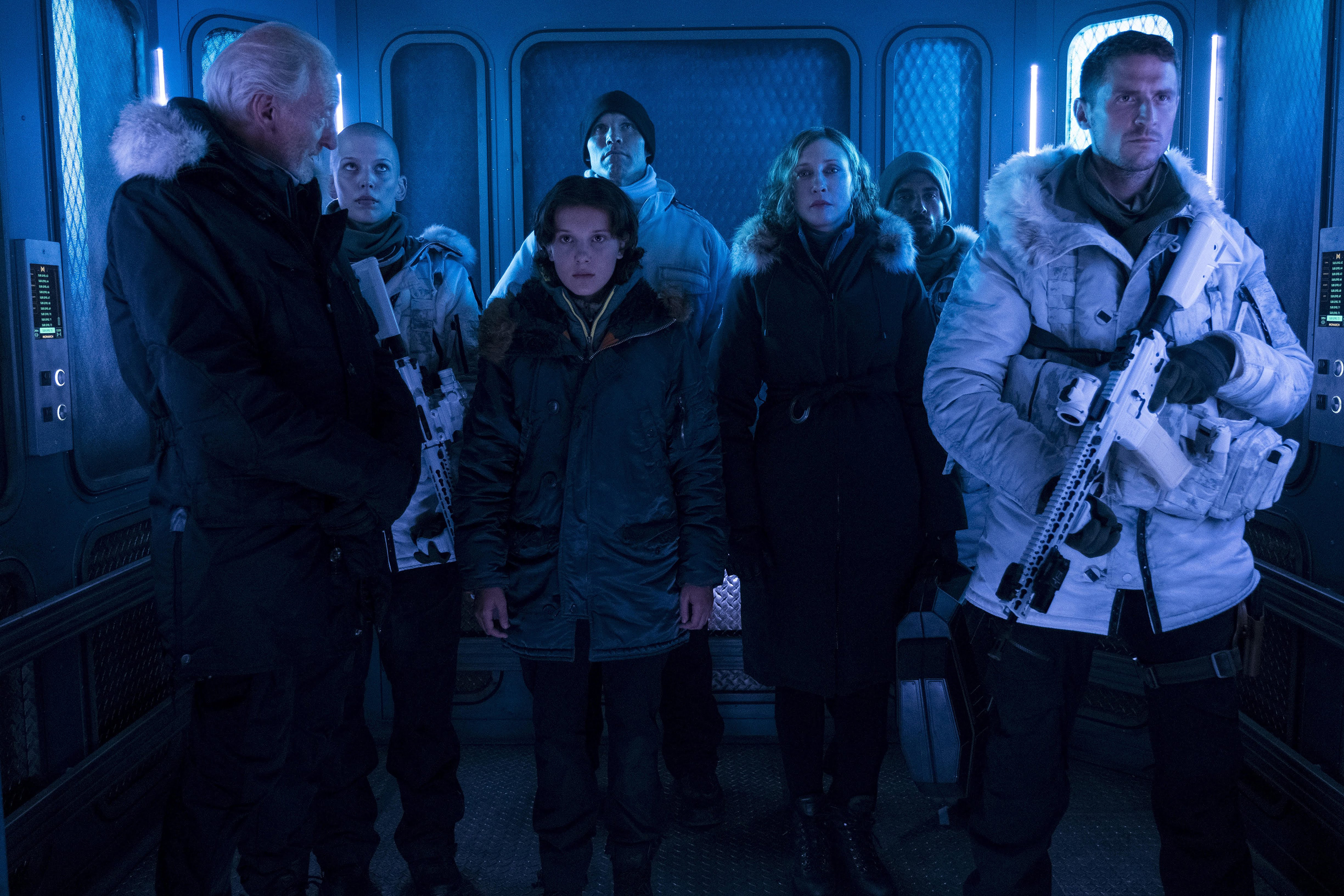 Alan Jonah (Charles Dance), Madison Russell (Millie Bobby Brown) and Emma Russell (Vera Farmiga). Photo courtesy of Warner Bros. Pictures. TM & © TOHO CO., LTD. © 2018 WARNER BROS. ENT. © LEGENDARY 2019
This movie has more action, more monsters and more Godzilla than GODZILLA (2014). The monsters seem well reimagined (with one exception). I think one monster’s rendering was not so successful; the imagery of the drastically reimagined famous monster is often obscure, and I just did not care for the new look, behavior or characterization. A main reason I like this movie and think many others will too is the pacing. The first giant monster action begins about ten minutes into the movie and the mayhem continues at a steady pace. There is a compelling human drama subplot that accelerates the action. The introduction of a Bond-style super villain with his own evil organization adds extra intrigue. The score pays tribute to Akira Ifukube with by presenting his recognizable themes and motifs that merge into new symphonic forms. The music by Bear McCreary is appropriately exciting without capsizing the overall monster action. The visual elements dominate while McCreary’s music reminds of Godzilla’s legacy and complements the action. One key sequence recapitulates the climax of the first 1954 Godzilla movie, but with a strange narrative inversion that partially repudiates or negates the significance of the original movie’s ending. While the tragedy of Hiroshima is remembered, The Bomb is somehow still accepted as an appropriate military tool in this universe. That key sequence paying homage to the 1954 original’s climax is wildly improbable (and illogical to say the least) but the beauty of the art design and composition of the scene, make the other science stuff less relevant. And this is a neo-Baroque Giant Critter Picture after all.
For more information on GODZILLA: KING OF THE MONSTERS, please see the earlier coverage here on SciFi Japan:
- Warner Bros. Pictures’ and Legendary Pictures’ MonsterVerse Kicks Into Gear as the Next Godzilla Feature Gets Underway
- GODZILLA: KING OF THE MONSTERS Trailer and Production Info From Warner Bros.
- GODZILLA: KING OF THE MONSTERS Official Photos From Warner Bros.
- New GODZILLA: KING OF THE MONSTERS Poster From Warner Bros. Pictures
- New GODZILLA: KING OF THE MONSTERS Trailer From Warner Bros. Pictures
- New GODZILLA: KING OF THE MONSTERS Monster Posters From Warner Bros. Pictures
- GODZILLA: KING OF THE MONSTERS Figures From NECA
- JAKKS Pacific Globally Launches New Godzilla Toys Inspired by Warner Bros. Pictures’ and Legendary Entertainment’s GODZILLA: KING OF THE MONSTERS
- More GODZILLA: KING OF THE MONSTERS Figures From NECA
- GODZILLA: KING OF THE MONSTERS Figures From Bandai
- GODZILLA: KING OF THE MONSTERS TV Spot 2 From Warner Bros. Pictures
- GODZILLA: KING OF THE MONSTERS Titan Books Press Release
- GODZILLA: KING OF THE MONSTERS To Be Shown in ScreenX Format
- GODZILLA: KING OF THE MONSTERS Product Line From JAKKS Pacific
- GODZILLA: KING OF THE MONSTERS TV Spot 3 "Intimidation" From Warner Bros. Pictures
- Win The GODZILLA: KING OF THE MONSTERS Giant Godzilla Figure From JAKKS Pacific!
- Win The GODZILLA: KING OF THE MONSTERS Godzilla Electronic Mask From JAKKS Pacific!
- GODZILLA: KING OF THE MONSTERS TV Spot 4 "Beautiful" From Warner Bros. Pictures
- GODZILLA: KING OF THE MONSTERS - 3 New TV Spots From Warner Bros. Pictures!
- New GODZILLA: KING OF THE MONSTERS Poster From Warner Bros. Pictures
- GODZILLA: KING OF THE MONSTERS Final Trailer From Warner Bros. Pictures!
- GODZILLA: KING OF THE MONSTERS Original Motion Picture Soundtrack Press Release
- GODZILLA: KING OF THE MONSTERS Japanese Press Notes, Photos and Logo From Toho
- GODZILLA: KING OF THE MONSTERS Final Credits
- GODZILLA: KING OF THE MONSTERS "Knock You Out - Exclusive Final Look" Video From Warner Bros. Pictures
- GODZILLA: KING OF THE MONSTERS Bus Shelter Poster From Warner Bros. Pictures
- GODZILLA: KING OF THE MONSTERS Cast and Director Interview Videos